Trip.com is a global online travel agency that lets travellers book accommodation alongside other travel products. For an independent traveller, its value is best assessed reservation by reservation: check the displayed room conditions, cancellation rights and the relevant supplier terms before paying.
How Trip.com Works for Hotel Bookings
AI-generated generic editorial illustration — not a retailer product photo and does not depict the reviewed product or service. Provide a neutral visual comparison that supports the reader's decision without depicting a real product.
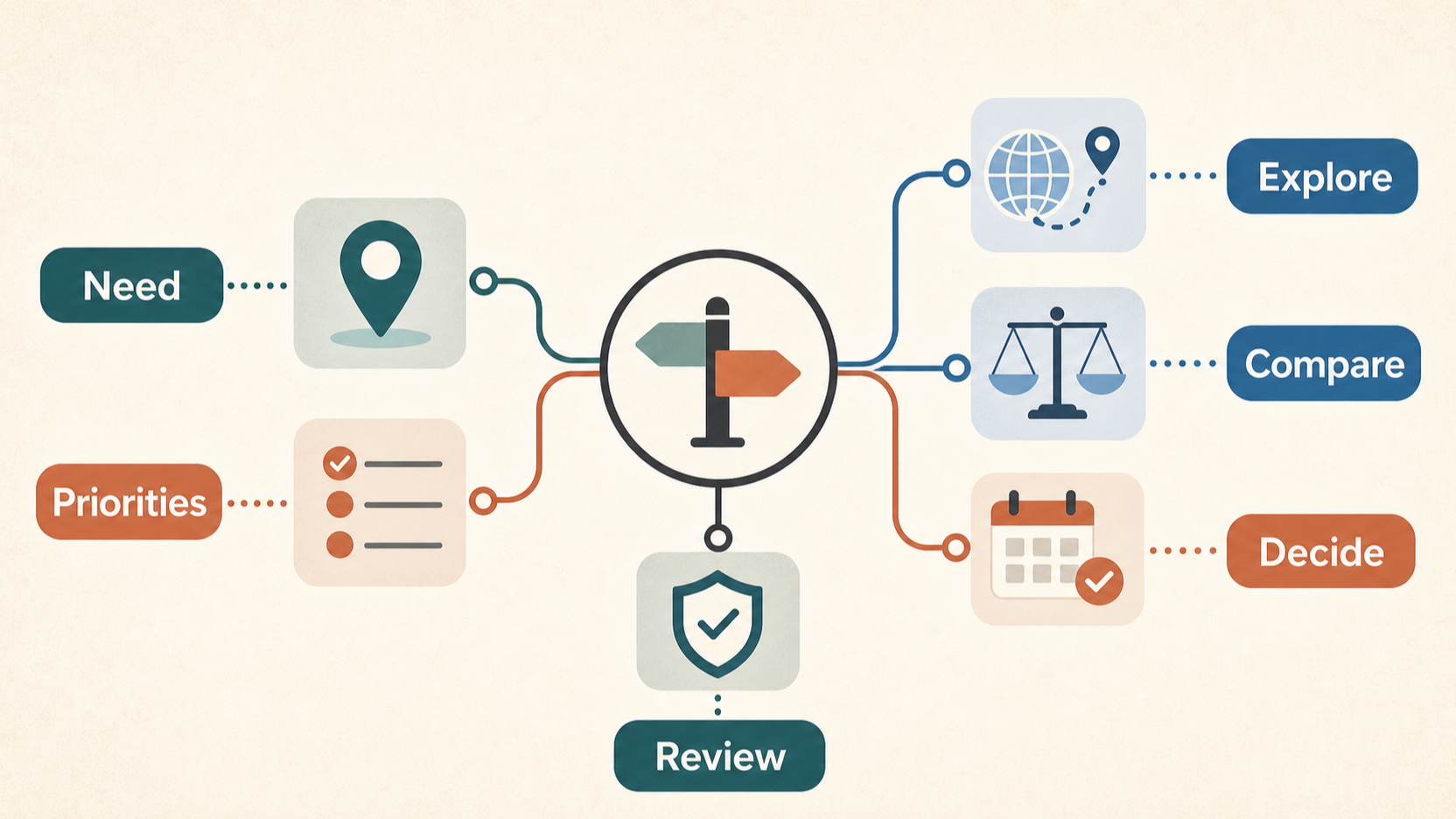 Trip.com operates a website and mobile app as a global online travel agency. Its booking service covers hotels and homes as well as flights, trains, car rentals, airport transfers and attraction tickets. In some booking countries, its travel-product range may also include ferries, buses, tours, cruises and trips.
For a hotel booking, Trip.com provides the booking service and customer support for bookings made on its platform. The accommodation itself is a travel product provided by a third-party supplier. That distinction matters: a booking is subject to Trip.com’s terms for its booking services and also to the relevant hotel or supplier’s terms and conditions.
The supplier terms form a separate legal agreement between the traveller and the relevant supplier. They are therefore worth reading alongside the rate information shown in the booking flow. Rather than treating a room listing as a uniform product, compare the particular room, guest details, included services and terms displayed for that stay.
This model can be useful when you want to organise an accommodation-led trip in one place, but it also means the conditions attached to one property or rate should not be assumed to apply to another. A hotel booking platform can make searching and booking easier; the final reservation conditions still need a property-specific check.
Trip.com Hotel Booking Strengths
One practical strength is breadth. Trip.com states that it supports bookings for hotels and homes alongside transport, transfers and attractions. For travellers building a trip around a stay, that range can make it a relevant platform to investigate when accommodation needs to sit alongside other travel arrangements.
Trip.com also states that customer support for bookings made on its website is available 24/7, with contact available through chat or phone. That gives travellers a stated route to seek help from the booking platform before travel or while a booking is active. Keep the confirmation details accessible, however, so a support request can be tied to the correct reservation.
Its published service-guarantee information includes assistance provisions for certain disruptions. For Hotels & Homes, Trip.com says it will notify a traveller if a confirmed stay cannot be arranged before arrival and will work with the property to try to arrange a room of the same or higher standard. If the original property cannot arrange a room type, it says it will help arrange a stay at a nearby property.
These are stated support provisions rather than a reason to assume a particular outcome in every case. Availability, the booking facts and the property’s position can all matter. The useful takeaway is that travellers have a documented platform support channel, while still needing to review the booking’s own conditions and retain their reservation information.
Room Rates Terms and Booking Conditions
A quoted room rate should be read as a set of conditions, not just a price. Trip.com’s terms state that different travel products can have different terms and conditions, including cancellation and change rights, and that these will be made available during the booking process. Review those details before completing payment, especially where flexibility matters.
The relevant supplier’s terms are also part of the booking picture. For a hotel reservation, those may be the hotel’s own terms and conditions. They form a separate agreement between the traveller and the supplier, so the supplier conditions deserve the same attention as Trip.com’s platform terms.
A sensible comparison is between like-for-like options: the same dates, occupancy, room type and rate conditions. Check what the displayed rate says about changes or cancellation, then consider whether the conditions suit the trip’s uncertainty. A lower headline price may carry a different set of rights from another available rate.
If a confirmed stay changes before arrival, Trip.com’s published Hotels & Homes information says it will do its best to coordinate the stay with the property. It also describes efforts to arrange an equivalent or higher-standard room, or a nearby stay if the original property cannot arrange a room type. That is an assistance process, not an unconditional guarantee, so the individual booking and the situation remain important.
Trip.com Limits and Watchouts
The central watchout is the marketplace structure. Trip.com allows travellers to book travel products provided by third-party suppliers, including hotels. A platform’s booking service and customer support do not remove the importance of the supplier relationship or turn all bookings into identical contracts.
Cancellation and change rights can vary by travel product and are presented during the booking process. Do not assume that a condition seen on one hotel rate, property or booking will be available on another. Before paying, confirm the terms shown for the exact accommodation option you intend to reserve.
Published support policies should also be read carefully. Trip.com says it will make every effort to assist with certain special-circumstance cancellation requests, and its guidance for unforeseeable medical conditions calls for supporting documents within one week of submitting a cancellation request. Whether a particular request fits a policy and what evidence is needed will depend on the case.
Similarly, Trip.com describes 24/7 emergency assistance and stated measures for confirmed Hotels & Homes booking changes, but these provisions involve handling a real situation with the property and available alternatives. Keep records of the booking, any changes and relevant supporting documents. This helps you compare the available options and contact the appropriate support channel with the facts at hand.
Who Trip.com May Suit
Trip.com may be worth investigating for independent travellers who want to book a hotel or home while also considering flights, trains, car rentals, airport transfers or attractions. Its stated range makes it relevant to an accommodation-led trip that includes several travel components.
It may also suit travellers who value having a stated customer-support route through chat or phone for bookings made on the platform. That can be particularly relevant when a traveller wants one platform to handle the booking service while a trip is underway.
Extra care is appropriate for anyone whose plans depend on a particular cancellation right, change option, room type or property condition. In those cases, inspect the rate details during booking and read the relevant supplier terms. The platform’s breadth does not replace the need to decide whether the exact reservation terms fit your plans.
Trip.com need not be the right choice for every traveller or every stay. The supplied information supports a platform-level assessment, not a universal comparison with direct booking or other booking sites. Use the displayed reservation conditions as the deciding evidence for the stay you are considering.
How to Book a Stay More Confidently
Before completing a Trip.com accommodation booking, use a short final check:
- Confirm the exact property, dates, occupancy and room option shown in the booking flow.
- Read the displayed rate conditions, including the applicable cancellation and change rights.
- Review the relevant hotel or supplier terms, which form a separate agreement for the travel product.
- Keep the confirmation and booking details available after payment.
- Note the customer-support route if you need help with a booking made on the platform.
This checklist is most useful when comparing more than one rate. Start with the accommodation you actually want, then compare the terms attached to each available option rather than relying on the headline price alone. If flexibility is important, make the cancellation and change conditions a deciding factor before payment.
If circumstances change after confirmation, gather the booking details and any relevant documentation before contacting support. Trip.com’s published information describes customer support through chat or phone and case-specific assistance provisions for some circumstances. The most reliable next step is to check the facts of your reservation and the terms that were made available in its booking process.
Frequently Asked Questions
Does Trip.com offer customer support for hotel bookings?
Yes. Trip.com’s terms say it provides customer support services for bookings made on its website. Its customer-service page states that customer support is available 24/7 through chat or phone. Keep the booking confirmation available when asking for help so the request can be connected to the relevant reservation.
Are hotel cancellation and change rules the same for every Trip.com booking?
No. Trip.com’s terms state that different travel products have different terms and conditions, including cancellation and change rights, and that these are made available during the booking process. Check the conditions shown for the exact hotel and rate before you complete the reservation.
Do hotel bookings made through Trip.com also have supplier terms and conditions?
Yes. Trip.com states that when you book a travel product, the booking is also subject to the relevant supplier’s terms and conditions. It says these form a separate legal agreement between you and the relevant supplier, so read them alongside the platform’s booking terms.
What should I check if a confirmed hotel booking changes before check-in?
Keep your booking details to hand and contact Trip.com through its stated support routes. Its Hotels & Homes guidance says it will notify travellers if a confirmed stay cannot be arranged before arrival and will work with the property to try to coordinate the stay or arrange alternatives. The handling of a specific disruption depends on the reservation and circumstances.
Sources
Related reading
- Best hotel booking sites: evidence-led picks for different kinds of trip
- Expedia review: who it suits and when another booking route is better
- Hotels.com review: accommodation focus, rewards and booking trade-offs
- How to identify genuine hotel deals without overlooking fees and conditions
Editorial information: About our editorial team · Read our editorial policy · Read our affiliate disclosure.